Both halves of Patek Philippe
Patek is leading the recovery of the entire market and losing a third of its value on a watch it has made since 1932. Understanding how both can be true is the most useful thing you will read this week.
First, the good half. Over the last twelve months of data, Patek Philippe is up 16.2%, against Rolex at 7.9% and Audemars Piguet at 3.4%. The overall market index rose 8.2% across four straight months of gains, and more than 70% of all brands tracked posted a positive three month performance, against roughly 3% a year earlier. The recovery is real, it is broad, and Patek is at the front of it.
Inside Patek, two collections did most of the lifting. The Aquanaut rose 14.9% and the Nautilus rose 13.3% across 2025. Both are steel sports watches with integrated bracelets, meaning the bracelet flows straight out of the case instead of attaching by separate lugs. They are the watches people queue for.
Now the other half. The Calatrava loses 34% the instant it is bought.
What a Calatrava is, because the name will mean nothing if you are new to this. It is Patek's plain watch. Round, thin, no extra functions beyond the time, designed to sit flat under a shirt cuff. Patek has made it continuously since 1932 and it is named after the Calatrava cross, the company's emblem, taken from a Spanish knightly order. In terms of pure reputation it is arguably the most respected simple watch design in the industry.
It is also the one losing a third on purchase.
And it goes further up the range. Modern Patek grand complications are selling at discounts of up to 50% below retail. A grand complication is the summit of watchmaking, a watch combining several difficult functions at once, typically a perpetual calendar with a chronograph and a chiming mechanism. These are the most expensive and most difficult things Patek builds, and they are moving at half price.
Why it splits this way. Joshua Ganjei, who runs European Watch Company, puts it down to collectors "prioritising scarcity, historical significance, and design continuity over what's currently in production." Money is moving to older references and away from whatever is currently in the catalogue. A Nautilus is hard to get, so it holds. A Calatrava can be bought, so it does not.
And this is where Rolex walks in. Rolex has just priced its new Perpetual Padellone at $59,000 to $72,800, directly under Patek's Annual Calendar Moon Phases at $67,517. As WatchPro's Rob Corder put it on Wednesday, "at the very least, both watches are appealing to the same customer." That Patek reference is already trading second-hand at roughly $58,000, about $12,700 below its own retail price, before Rolex's alternative has even reached shops.
The lesson, and it applies to every brand. The gap inside Patek is now wider than the gap between Patek and its rivals. One reference trades far above retail while another loses a third on the way out of the door, and they share a name, a factory and a logo.
Buying "a Patek" stopped being a strategy some time ago. The brand is not the unit of analysis any more. The reference is. Module Two, Chapter 4 covers how to tell them apart before you buy rather than after.
What the rest of the week actually means
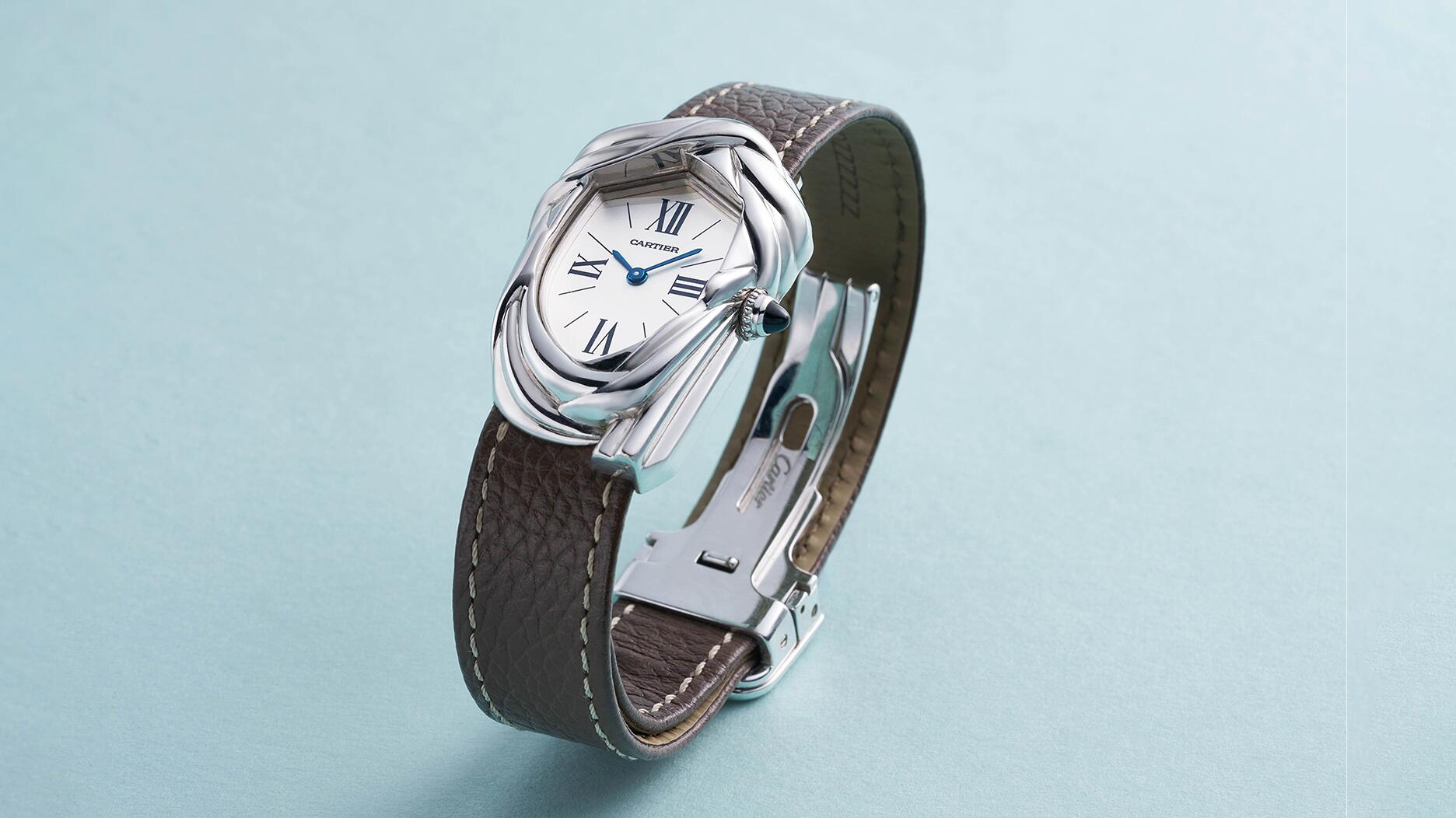
Cartier's new ceiling. A brand's auction record is the ceiling that everything below it gets priced against. Cartier has lifted its own ceiling twice in five months, and by about seventy percent in the process. That is not one strange result on one strange night. That is a brand being repriced in public, and everybody holding vintage Cartier has just had their asking price confirmed by somebody else's money.
The Le Locle thefts. We covered the Plaza Athénée theft in Paris as a story about people being robbed of what they were wearing. This is a different problem. A stolen watch off a wrist is an insurance claim. A stolen nineteenth century marine chronometer is simply gone, because there is no second one and no amount of money replaces it. Museum pieces are also very hard to sell, which means they usually get broken up for parts or hidden for decades. Either way they leave the market permanently, and every piece taken makes the surviving examples scarcer.
Vacheron's credit line. Naming the maker is how the art world creates value, and how independent watchmaking already works. Nobody buys an F.P. Journe without knowing who Journe is. If the big houses start crediting the hands behind the dials, those names build followings, and followings eventually build prices.
The two charity sales. Charity results are usually treated as sentimental and unreliable, and for ordinary lots that is fair. But when two houses put unique pieces from the two most watched names in the industry into the same week, the prices stop being charity numbers and start being a temperature reading. Watch both, then compare them to what the same brands do at ordinary sales in November.
The gold in the drawer. That is the largest unlisted stock of watches in the world and it is sitting in sock drawers. Good dealers already know this, which is why the useful question has never been "are you selling" but "what else is in the box." Half the people you ask have an answer.